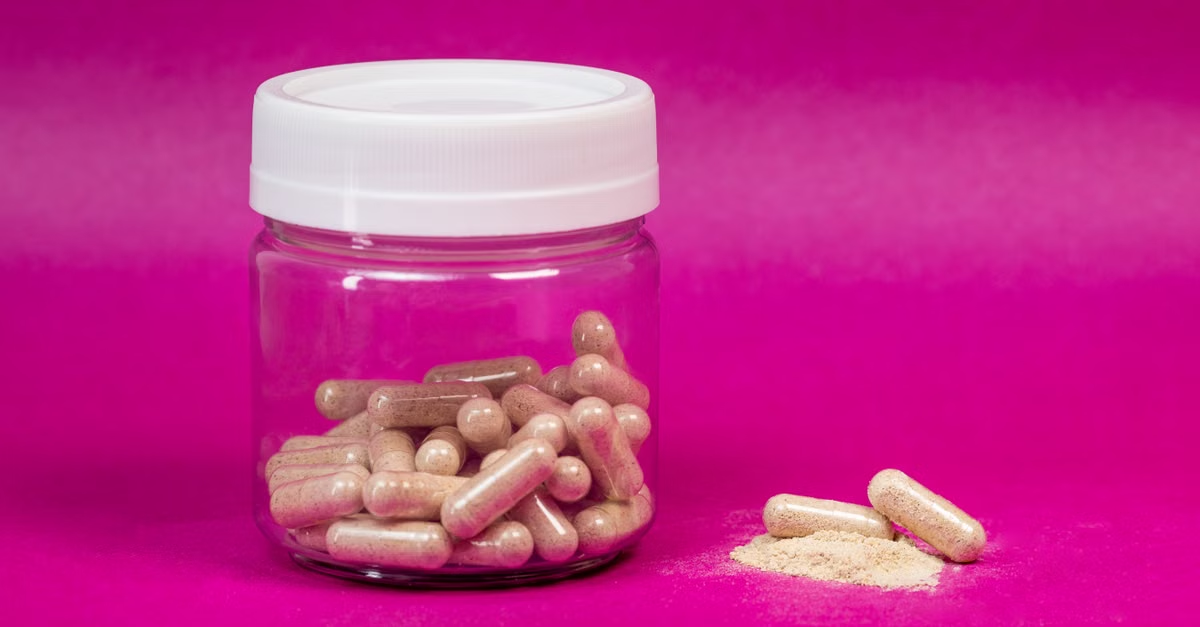
Vitamin Tablets: A Comprehensive Guide to Types, Benefits, Dosage, and Safety
Introduction 💊 Vitamin Tablets in Context
Vitamin tablets are dietary supplements designed to help fill nutrient gaps, support overall health, and complement a balanced diet. They come in several forms—tablets, capsules, chewables, effervescent, and time-release preparations—each with unique benefits and considerations for absorption, taste, and convenience. For brands involved in contract manufacturing or private-label development, understanding these formats is essential to delivering products that meet consumer expectations for efficacy and clean-label formulations.
Plant-based ingredients and vegan-certified options are increasingly popular, driven by demand for clean-label, allergen-conscious products, a topic covered in Natural Vitamin Supplements: The Comprehensive Guide to Plant-Based Options.
Expert insight:
“Consumers aren’t just buying nutrients; they’re buying trust. brands that can clearly communicate bioavailability, sourcing, and rigorous testing will win long-term loyalty.” — Dr. Maya Chen, nutrition scientist
Forms of Vitamin Supplements 🧭
In this section, we evaluate each form in the context of practical use, absorption, and consumer expectations. For contract manufacturers and private-label teams, aligning product design with market demand—while maintaining safety and regulatory compliance—is paramount.
Item A: Vitamin D3 2000 IU tablets (vegan option available) ☀️
Form
The Item A formulation is a traditional tablet designed for straightforward dosing and stable shelf life. A vegan option may be available as a plant-based cholecalciferol source or via alternate shell materials that do not compromise the tablet's integrity.
Dose per unit
Each unit provides 2000 international units (IU) of vitamin D3, aligning with common maintenance or repletion strategies for adults with limited sun exposure or higher needs. Some consumers consider higher or lower doses based on serum testing and clinician guidance.
Vegan status
Vegan viability is noted as an optional feature. When vegan, the product uses sources like lichen-derived D3 or synthetic processes that avoid animal-derived materials while maintaining comparable bioactivity.
Certification
Certification status is described as optional USP Verified in many market versions, providing an independent verification of label claims and manufacturing quality controls.
Allergen-free
Formulations are typically gluten-free and dairy-free, with common allergen concerns at the distributor level identified in label statements. Cross-contact controls are essential in manufacturing to protect sensitive consumers.
Bioavailability
Vitamin D3 is fat-soluble, and absorption is optimized when taken with a meal containing dietary fat. The standard tablet format provides reliable bioavailability when used as directed, though some brands pair the ingredient with naturally emulsified carriers to enhance uptake.
Price per serving
Typical price range: $0.05–$0.20 per serving, depending on vegan sourcing, shell materials, and packaging choices. Private-label partners can optimize cost via bulk sourcing and validated supply chains.
Item B: Vitamin B12 methylcobalamin 1000 mcg chewables (vegan) 🟢
Form
Item B uses a chewable format, which can improve palatability and adherence for certain consumer segments—particularly younger adults or those who dislike swallowing capsules or tablets.
Dose per unit
Each chewable provides 1000 mcg of methylcobalamin, a highly bioavailable form of vitamin B12. This dosage supports maintenance for many adults and can address subclinical deficiencies in at-risk populations.
Vegan status
Vegan by design, with plant-derived sweeteners and minimal animal-derived ingredients, appealing to vegan and vegetarian consumers seeking clean-label options.
Certification
Optional USP Verified labeling is available, offering independent verification of ingredient identity and manufacturing controls.
Allergen-free
Typically gluten-free and dairy-free, though formulators should verify the absence of common allergens and ensure production lines are free from cross-contact.
Bioavailability
Methylcobalamin is readily absorbed in the small intestine and does not require intrinsic factor to the same extent as cyanocobalamin. Chewable forms can facilitate rapid interface with the oral mucosa, potentially aiding early absorption before intestinal processing.
Price per serving
Typical price range: $0.10–$0.30 per serving, influenced by sweeteners, flavor systems, and packaging choices for chewables.
Item C: Vitamin C 1000 mg effervescent tablets.
Form
The product is an effervescent tablet designed to dissolve in water, delivering a refreshing beverage-like form with the vitamin C dose already dissolved for immediate uptake in the gut.
Dose per unit
Each tablet delivers 1000 mg of vitamin C, a dose commonly used to support antioxidant defenses and immune health in adults—often chosen for convenience and hydration appeal.
Vegan status
Typically vegan, assuming no animal-derived processing aids. Many brands ensure plant-based flavoring and colorants to maintain clean-label integrity.
Certification
Optional USP-verified labeling is available, depending on the manufacturer's quality program, testing cadence, and packaging compliance.
Allergen-free
Effervescent formulations generally aim to be gluten-free and dairy-free, but cross-contact risks and maltose or gluten-containing formulations should be checked on the label.
Bioavailability
Vitamin C is water-soluble, and effervescent delivery may provide rapid gastric absorption. The dissolved form can support quick plasma availability, though overall bioavailability parallels standard ascorbic acid absorption kinetics at typical dietary intakes.
Price per serving
Typical price range: $0.05–$0.20 per serving, with premium flavors or vitamin-C-derived antioxidants potentially pushing higher.
Item D: Liposomal Vitamin C 1000 mg softgels (bioavailability-focused) 🧪
Form
The Item D variant uses softgels designed to encapsulate vitamin C in a lipid bilayer, promoting targeted delivery and potential protection from digestive degradation.
Dose per unit
Each softgel provides 1000 mg of vitamin C, consistent with high-absorption strategies while maintaining a convenient single-dose format.
Vegan status
Vegan options are available depending on the capsule material and shell. It is essential to confirm that gelatin or other animal-derived components are not used in vegan formulations.
Certification
Optional USP Verified labeling can be pursued, reinforcing quality-control standards and accurate labeling claims for the liposomal technology claim.
Allergen-free
Typically dairy- and gluten-free; however, cross-contact controls should be verified, especially in facilities handling dairy or soy products.
Bioavailability
Liposomal encapsulation can enhance bioavailability by protecting vitamin C from early degradation and facilitating cellular uptake through lipid-assisted pathways. This delivery method is increasingly popular in premium formulations.
Price per serving
Typical price range: $0.50–$1.50 per serving, reflecting the advanced delivery system and encapsulation technology, which adds processing steps and raw-material costs.
Item E: Time-release Vitamin E 400 IU tablets
Form
Item E is a time-release tablet, engineered to extend nutrient delivery over several hours, which can help maintain steadier blood levels and potentially reduce dosing frequency.
Dose per unit
Each unit provides 400 IU of vitamin E, aligning with typical maintenance dosing for adults, while higher-dose formulations are available for specific clinician-guided needs.
Vegan status
Vegan suitability depends on the shell material and excipient choices. Some versions use plant-based shells, while others may rely on conventional materials with vegan-certified processing aids.
Certification
Optional USP Verified labeling can be included to demonstrate compliance with quality standards and accurate labeling of time-release claims.
Allergen-free
Generally gluten-free and dairy-free; however, readers should check for soy or peanut-containing ingredients that might be present in minor excipients.
Bioavailability
Vitamin E is fat-soluble; time-release designs can help sustain absorption while mitigating peak plasma fluctuations, potentially supporting steady antioxidant protection over the day.
Price per serving
Typical price range: $0.08–$0.25 per serving, reflecting the added complexity of time-release technology and coating processes.
Item F: Adult multivitamin tablet (with minerals) 🧩
Form
Item F falls into the tablet category that combines a spectrum of vitamins and minerals in a single daily dose, commonly used for convenience and broad coverage of micronutrient needs.
Dose per unit
Dosage varies by product, but most adult multivitamins provide a comprehensive array of vitamins (A, B, C, D, E, K) and minerals (e.g., zinc, magnesium, calcium) in one tablet or two-equivalent servings.
Vegan status
Many brands offer vegan options within multivitamins, using plant-based sources for micronutrients and avoiding gelatin capsules or non-vegan binders.
Certification
Certification is optional; some products pursue USP Verified to establish credibility around labels, ingredient identity, and manufacturing cleanliness.
Allergen-free
Allergen considerations vary; products may be gluten-free, dairy-free, and soy-free, but label verification is essential to ensure alignment with consumer needs.
Bioavailability
Bioavailability in multivitamins depends on the formulation (chelated minerals, bioactive forms, and appropriately balanced fat-soluble vitamins). Manufacturers optimize for pleasant tolerability while preserving absorption efficiency.
Price per serving
Typical price range: $0.10–$0.50 per serving, influenced by the breadth of nutrients, quality controls, and inclusion of specialty minerals or chelated forms.
Absorption, Bioavailability, and Interactions 🔬
Absorption is governed by solubility, formulation, and the presence of dietary fats. Water-soluble vitamins (e.g., B vitamins, vitamin C) are readily absorbed in the small intestine and excreted when taken in excess, while fat-soluble vitamins (A, D, E, K) require lipids for optimal uptake and can accumulate in tissues if taken in excessive amounts. Advances in delivery—such as liposomal encapsulation and time-release technologies—aim to improve stability and tissue delivery, particularly for nutrients with challenging bioavailability profiles.
When considering interactions, the timing and combination of nutrients matter. For example, calcium and iron can compete for absorption, while calcium and zinc may influence mineral balance. Vitamin K can interact with anticoagulants, demanding caution for individuals on blood-thinning therapy. Dietary fat enhances absorption of fat-soluble vitamins; taking a multivitamin with a small meal containing fat can improve uptake. For specialized formulations (e.g., liposomal C), follow label guidance on timing relative to meals and other medications.
Expert observation:
“Bioavailability isn’t a single measure; it’s a function of formulation, matrix, and the consumer’s diet. Consumers should prioritize products that provide transparent data about absorption and realistic expectations about efficacy.” — Dr. Elena Rossi, clinical nutritionist
Reading Labels and Certifications: How to Verify Quality 🏷️
Quality verification helps consumers distinguish products that are accurate, safe, and manufactured under rigorous standards. Look for third-party certifications, clear per-serving amounts, complete ingredient lists, allergen statements, and transparent manufacturing information. Label visibility around sourcing, manufacturing dates, and lot codes supports traceability and product integrity.
Certification and verification
Key certifications include USP Verified, NSF Certified for Sport, and Informed-Choice. USP verification focuses on potency, purity, and label accuracy, while NSF and Informed-Choice emphasize safety in sport and third-party quality assurance, respectively. Certifications help brands demonstrate reliability to retailers and consumers, particularly in private-label contexts where accountability signals are critical.
Label details to scrutinize
Per-serving amounts, % Daily Value (%DV), complete ingredient lists, and allergen statements are essential. Manufacturing dates and lot codes enable traceability in recalls or quality investigations. Additionally, check for vegan/vegetarian shells and any fillers or binders that may affect clean-label positioning. Clear sourcing statements and, when possible, transparency around finished-product testing further support consumer trust.
Transparency and traceability
Consumers increasingly expect forthright information about ingredient origin and testing results. Brands can add value by providing access to third-party certificates, independent lab results, and summary QA dashboards. This transparency helps differentiate products in crowded marketplaces, particularly for online channels where buyers rely on digital documentation to assess quality.
Expert note:
“Third-party testing isn’t just a checkbox; it’s a promise to the consumer that what’s on the label is what’s in the bottle, every time.” — Dr. Rajiv Kapoor, food-science technologist
Regulatory Context and Safety ⚖️
Dietary supplements exist under a distinct regulatory framework in many regions. In the United States, the Dietary Supplement Health and Education Act (DSHEA) governs labeling, claims, and manufacturing practices, but pre-market approval of supplements is not required. Instead, manufacturers must follow GMPs (Good Manufacturing Practices) and ensure product safety, with post-market surveillance addressing issues as they arise. Regulatory contexts vary internationally, so brands working with contract manufacturers should align product development with local requirements and harmonize labeling across markets where feasible.
Safety considerations include risks associated with overuse and potential nutrient–drug interactions. Fat-soluble vitamins (A, D, E, K) can accumulate with excessive intake, and minerals may interact with medications (e.g., anticoagulants, thyroid medications). Deficiencies can also occur with poor adherence or interactions—highlighting the need for clinician guidance in cases of recurrent deficiency, chronic conditions, pregnancy, or polypharmacy.
Regulatory perspective:
“Compliance isn’t a one-off effort; it’s ongoing quality control that protects consumers and sustains brand integrity across markets.” — Regulatory affairs specialist, private-label manufacturing
Quality Indicators and Practical Tips for Selecting Products 🧭
When evaluating vitamin-tablet products, prioritize third-party testing, clear ingredient labeling, and packaging that preserves potency. Look for products with sustained-release features only when they align with intended consumer benefits, and avoid formulations with unnecessary additives. Shelf life, storage requirements, and packaging integrity all influence product performance and consumer satisfaction.
Practical steps include evaluating vegan/allergen-free options, calculating cost per serving, understanding shelf life, and reviewing brand reputation. For private-label plans, pre-approval of label claims, clear ingredient sourcing, and documented QA processes can reduce time-to-market and minimize post-launch issues.
Practical tips in brief
Seek third-party testing and visible certifications (USP, NSF, Informed-Choice) on packaging or in product dossiers.
Choose products with clear ingredient lists, known excipients, and explicit allergen statements.
Prefer vegan and allergen-free options when targeting sensitive consumer segments.
Assess cost per serving and packaging efficiency for private-label launches.
Confirm storage conditions and shelf life to maintain potency during distribution.
Trends in Vitamin Tablets: Plant-Based, Allergen-Free, and Online Purchasing 🌱🛒
The market is shifting toward more plant-based inputs, cleaner labels, and accessible online education around product quality. Consumers increasingly seek vegan D3 sourced from lichens, fermentation-derived B12, and other nutrient forms that minimize animal-derived processing. Allergen-free formulations—gluten-free, dairy-free, soy-free—are becoming table-stakes in many premium lines, while clean-label positioning emphasizes minimal artificial additives and transparent ingredient sourcing.
Online purchasing continues to grow, driving demand for robust product data, testing results, and easy access to lab certificates. Retailers and direct-to-consumer brands are experimenting with subscription models, straight-to-consumer transparency dashboards, and QR-code-enabled batch traceability to build ongoing trust with customers.
Using Vitamin Tablets Effectively: Timing, Dosage, and Safety ⏰
Effective use hinges on aligning dosage with individual needs, deficiency status, and recommended daily allowances. Avoid exceeding upper intake levels (where applicable) for fat-soluble vitamins and minerals to minimize toxicity risk. Timing matters: take fat-soluble vitamins with meals containing fats to optimize absorption; some formulations (liposomal, time-release) may include specific guidance about timing relative to meals and other medications.
To support adherence and minimize interactions, consider consistent timing, documentation (e.g., a simple log), and consultation with a pharmacist or clinician—especially for people taking anticoagulants, thyroid medications, or high-dose mineral supplements. If deficiencies or chronic conditions are present, personalized guidance ensures that supplementation complements medical treatment rather than competing with it.
Practice tip:
“For many, routine is the most powerful enhancer of supplement efficacy. A consistent daily habit, paired with clinician guidance when needed, yields the best outcomes.” — Dr. Helen Park, clinical dietitian
Representative Product Rows: Quick Reference ⚡
Below are representative product profiles aligned with the comparison criteria. Each item includes a concise synthesis of form, dosage, vegan status, certifications, allergen considerations, bioavailability perspective, and price per serving. This quick view helps brands and retailers compare options for private-label development and market positioning.
Item A: Vitamin D3 2000 IU tablet — Form: Tablet; Dose: 2000 IU; Vegan option: Yes; Certification: Optional USP Verified; Allergen-free: typically gluten/dairy-free; Bioavailability: standard (with fat); Price: $0.05–$0.20 per serving.
Form
Tablets are stable, easy to package, and widely accepted by consumers seeking traditional dosing formats. This form complements standard private-label timelines and supply-chain workflows.
Dose per unit
2000 IU per tablet provides a practical maintenance or repletion option for adults with limited sun exposure or higher needs, while allowing easy scaling across product lines with smaller or larger dose variants if required.
Vegan status
Vegan options are available, enabling inclusion in vegan dietary lines and support for vegan labeling claims inside private-label programs.
Certification
USP Verified certification is optional, offering an independent quality signal for retailers and consumers seeking verified potency and label accuracy.
Allergen-free
Typically gluten- and dairy-free, addressing common allergen concerns in mainstream markets.
Bioavailability
As a fat-soluble vitamin, D3 absorption improves when taken with dietary fat. Private-label partners can emphasize packaging guidance that aligns with this requirement to optimize consumer results.
Price per serving
Approximately $0.05–$0.20 per serving, depending on sourcing, vegan shell options, and packaging scale.
Item B: Vitamin B12 methylcobalamin 1000 mcg chewable — Form: Chewable; Dose: 1000 mcg; Vegan: Yes; Certification: Optional USP Verified; Allergen-free: typically gluten/dairy-free; Bioavailability: high; Price: $0.10–$0.30 per serving.
Form
Chewables offer palatability and ease of use for consumers who prefer not to swallow pills, which can support adherence across demographics.
Dose per unit
1000 mcg per chewable provides a robust dose commonly used for daily maintenance and addressing subclinical deficiencies, with room for higher-dose variants if clinically indicated.
Vegan status
Vegan formulations are standard for this item type, with plant-based sweeteners and flavorings widely used in the market.
Certification
Optional USP Verified labeling can be pursued to demonstrate potency accuracy and manufacturing oversight.
Allergen-free
Typically gluten- and dairy-free, though cross-contact controls should be verified, especially in multi-product facilities.
Bioavailability
Methylcobalamin is highly bioavailable and does not require extensive metabolic activation, supporting efficient absorption in a chewable format.
Price per serving
Approximately $0.10–$0.30 per serving, influenced by flavor systems and quality-control practices.
Item C: Vitamin C 1000 mg effervescent — Form: Effervescent; Dose: 1000 mg; Vegan: Yes; Certification: Optional USP Verified; Allergen-free: gluten/dairy-free; Bioavailability: good; Price: $0.05–$0.20 per serving.
Form
Effervescent tablets dissolve in water, creating a palatable, hydration-friendly delivery method that appeals to consumers seeking a beverage-like supplement experience.
Dose per unit
1000 mg per tablet provides a strong antioxidant dose suitable for daily use or targeting short-term immune support during seasonal challenges.
Vegan status
Most effervescent vitamin C products are vegan, provided flavorings and excipients are plant-based and free from animal-derived components.
Certification
USP Verified options exist as an optional signal of quality, though not all formulations carry this certification.
Allergen-free
Gluten- and dairy-free versions are common; however, consumers should review labels for soy or malt-derived ingredients that could pose issues.
Bioavailability
Vitamin C is water-soluble, and effervescent delivery can support rapid gut absorption; overall bioavailability aligns with standard ascorbic acid uptake in typical dosing ranges.
Price per serving
Approximately $0.05–$0.20 per serving, with premium flavors or additional minerals potentially raising costs.
Item D: Liposomal Vitamin C 1000 mg softgel — Form: Softgel; Dose: 1000 mg; Vegan: Optional; Certification: Optional USP Verified; Allergen-free: dairy/gluten-free; Bioavailability: high; Price: $0.50–$1.50 per serving.
Form
Softgels provide a lipid-encapsulated pathway designed to shield vitamin C from gastric degradation and potentially enhance tissue delivery.
Dose per unit
1000 mg per softgel offers a concentrated, convenient single-dose option for consumers seeking enhanced absorption through liposomal delivery.
Vegan status
Vegan suitability depends on shell materials and processing aids; some products are vegan-certified, while others may use gelatin-based shells.
Certification
USP Verified labeling is optional, reflecting broader quality-control assurances in premium liposomal products.
Allergen-free
Typically dairy- and gluten-free; verify absence of soy or other common allergens in excipients.
Bioavailability
Liposomal delivery is designed to improve bioavailability by enhancing intestinal uptake and cellular delivery, a feature often highlighted in premium formulations and private-label marketing.


